The current US convention for tipping Uber and Lyft drivers is 15-20% of the ride cost, with $1-$3 minimums on short trips. Tipping is now socially expected in 2026 — it shifted from optional to standard over the past five years.
Rideshare tipping in the US has shifted dramatically over the past five years. In 2018-2019, tipping an Uber or Lyft driver was widely considered optional — the apps had only recently added tipping features, and a large share of riders never tipped. By 2026, the social norm has firmed up: 15-20% is the customary range for satisfactory service, and consistently not tipping marks you as either out of touch or actively unkind to drivers.
This guide covers exactly how much to tip in 2026, which factors shift the percentage up, the cash-vs-in-app trade-off, and what drivers actually take home from a typical ride.
The Quick Answer
For a standard Uber or Lyft ride in the US in 2026:
| Ride Cost | Standard (15%) | Default (20%) | Generous (25%) |
|---|---|---|---|
| $8 | $1.20 (round to $2) | $1.60 (round to $2) | $2 |
| $15 | $2.25 (round to $3) | $3 | $3.75 (round to $4) |
| $25 | $3.75 (round to $4) | $5 | $6.25 (round to $7) |
| $40 | $6 | $8 | $10 |
| $60 (airport) | $9 | $12 | $15 |
| $100 (long trip) | $15 | $20 | $25 |
The 2026 default for satisfactory rideshare service is 20%. The 15% line is the floor; 25% is for excellent service or rides with special circumstances (heavy luggage, multiple stops, bad weather, late night). On short rides, a minimum of $2 is customary regardless of percentage, since the math otherwise produces sub-$1 tips that are functionally insulting.
For specific rides, use the Tip Calculator to handle splits between riders or to round to a comfortable total.
Why Rideshare Tipping Became Standard
Three forces drove the shift from "optional" to "expected" tipping over the past 5-6 years.
Driver earnings declined as both Uber and Lyft adjusted their pricing. Both companies have changed their fare structures multiple times in the past decade, generally shifting more of the customer payment to the platform and less to the driver. Tipping has become a meaningful share of total driver earnings — for many full-time drivers, the difference between profitable and not.
In-app tipping became frictionless. Adding a tip is now a two-tap action in both apps, with suggested amounts pre-calculated. The friction barrier that historically suppressed tipping is gone.
Driver visibility and social norms shifted. Posts and discussions about driver earnings became widely visible across social media. The "you should tip your driver" expectation moved from advocacy to mainstream norm.
The result in 2026: a consistent no-tip pattern is socially noticed. Drivers can see (in some markets) whether the previous rider tipped, and consistent non-tippers may experience lower rating, slower pickup acceptance, or cancellations in some markets.
When to Tip Above the Standard
Several situations where 20% is the floor, not the default, and 25%+ is appropriate:
Bad weather. Heavy rain, snow, ice, extreme heat — driving conditions are harder, and the driver chose to be on the road for your trip. Add 5-10 percentage points or a flat $3-$5 extra.
Heavy or multiple bags. Helping with luggage takes time and physical effort. Airport pickups and drop-offs commonly involve 2-4 bags. Add $5-$10 extra above the standard percentage.
Multiple stops. Adding a stop to the route adds 5-15 minutes to the ride. Add $2-$5 per stop above standard tipping.
Late night (post-midnight) rides. Especially in cities where drivers may face longer waits between rides at night. The standard plus 25% (so 25% total tip) is generous and reasonable.
Drunk passengers. If you or your party are intoxicated, tip 25%+ as recognition that the driver is doing a service that goes beyond standard transport (preventing a DUI, managing potentially difficult passengers).
Long or expensive rides where the driver provided real conversation, expertise, or extras. A 45-minute airport ride where the driver was genuinely helpful warrants 25% or more.
Holiday season (December). Many regular rideshare users tip 25%+ during the holidays as a season-of-giving gesture.
When 15% Is Acceptable (and When It's Not)
The 15% floor is defensible for:
- Quick, uneventful, basic rides where the driver did the minimum (drove from point A to point B safely without conversation, luggage help, or extras).
- Short rides where the percentage produces a small absolute amount and the minimum-tip rule kicks in (e.g., $1.20 on $8 → tip $2 instead).
15% is NOT acceptable for:
- Long rides where the driver provided real service (airport with bags, multiple stops, conversation if you engaged, route knowledge).
- Bad weather rides.
- Any ride where the driver went out of their way to help.
A consistent pattern of 15% across all your rides is below where the convention has settled in 2026. 20% is the default.
Cash vs In-App Tipping
Both Uber and Lyft prefer in-app tipping for simplicity, but cash tipping has real advantages for drivers:
In-app tip advantages:
- Frictionless, included in the same transaction as the fare.
- Recorded automatically for the driver's records.
- Easy to forget and add later (you can tip up to 30 days after the ride).
Cash tip advantages:
- Immediate to the driver (no platform delay).
- Not subject to the platform's processing or fee structures.
- Visible recognition at the moment of service.
- Driver can spend it before the end of the shift if needed.
In 2026, the convention is mostly in-app for convenience. Cash is appreciated, particularly on longer rides or excellent service, and is often preferred by drivers when offered.
A common pattern that works well: in-app tip for the standard service, plus a small cash bill ($5-$10) handed to the driver at the end of a long ride or one where they provided extra service.
What Drivers Actually Take Home
A useful reality check on the dollar amounts. On a $25 Uber ride in 2026:
- Customer pays: $25
- Platform service fee + booking fee: ~$5-$8 (varies by market)
- Driver's per-trip earning: $17-$20 (before driver's vehicle costs and self-employment tax)
- After estimated 25-35% for fuel, vehicle wear, insurance, maintenance: $12-$15 net
- Less self-employment tax (15.3% of self-employment income): $10-$13 net take-home
In this context, a $5 tip on the $25 ride increases the driver's take-home by 38-50% — a meaningfully different return on the same trip. Drivers do not see the tip as marginal; they see it as the difference between profitable and not.
This is the reason the standard convention has settled at 20%. The math on driver economics genuinely depends on it.
Specific Service Tiers
Different rideshare tiers have slightly different conventions:
Standard (UberX, Lyft Standard): 15-20% standard.
Larger vehicles (UberXL, Lyft XL): 18-22% — the driver bears higher vehicle costs.
Premium (Uber Black, Lyft Lux): 20-25%, sometimes higher. The customer base expects premium service; drivers expect premium tips.
Carpool / Shared (UberPool, Lyft Shared): 15-20% on your portion of the fare. The driver picked up multiple riders; each tip is independent.
Uber Eats / Lyft Delivery (if same driver pool): Separate convention; see How Much to Tip on Food Delivery.
Airport Rides Specifically
Airport rides have their own convention because of the special service involved:
- Driver waits in airport queue (often 30-60 minutes of unpaid time).
- Heavy luggage assistance.
- Often pre-dawn or late-night timing.
- Longer trips than typical urban rides.
For airport rides, the convention is 20-25% minimum, with $5-$10 cash extra for luggage assistance and any pre-dawn / late-night timing. A $60 airport ride should tip $12-$18, plus $5-$10 cash for bags.
When NOT to Tip
A small set of situations:
Driver was genuinely unprofessional. Reckless driving, refusing reasonable requests, hostile behavior, gross vehicle condition. Tip the platform minimum ($0) and report the driver via the app. Use the in-app rating to communicate the issue accurately.
Driver cancelled and you were rebooked with another. Tip only the driver who actually completed your trip.
You were given an undisclosed unsanitary vehicle. Pet hair when you indicated allergies, strong smoke smell with a non-smoker app setting, garbage in the back seat. Tip the floor or zero and report.
In nearly all other cases, tip the standard 20%.
Frequently Asked Questions
Can I tip Uber/Lyft drivers after the ride? Yes — both apps let you tip up to 30 days after the ride completes. Many riders set a habit of tipping at the end of the week after reviewing each ride.
Should I tip my UberPool driver? Yes, at the same 15-20% as a standard ride. The driver does not earn more from carrying multiple passengers per trip — they earn the same per-passenger fare. Your tip is independent of the other riders' tips.
What if Uber's price surged 3x during the ride? Tip on the surged price (the actual ride cost). The driver receives more during surge pricing, but the standard convention still applies — 15-20% of whatever you paid.
Do drivers see my tip immediately? On both Uber and Lyft, drivers see the tip notification shortly after it's added — usually within minutes. They do not see the tip until after they've rated you, so tipping does not affect your rating.
Should I tip if the driver rated me low or refused service? You decide. Tipping is not a moral obligation; it's a service recognition. If the service was good and ended professionally, tip standard. If the service was bad, no tip and report.
How does tipping affect future ride acceptance? In some markets, drivers can see (or quickly check) a rider's tipping history. Consistently non-tipping riders may experience slower acceptance or more cancellations. This is not officially endorsed by the platforms but is a real market dynamic in 2026.
Next Steps
For exact tip math on any specific ride — particularly for splits between multiple riders or for rounding to clean totals — use the Tip Calculator. For US tipping conventions across every other service category, see the Tipping Guide: U.S. Standards by Service.
The rideshare tipping convention has firmed up at 15-20% over the past few years, with 20% as the default for satisfactory service. For frequent rideshare users, building the habit of consistent 20% tipping (in-app or cash) is one of the simplest ways to ensure good driver relationships and reliable service over time.
Run the numbers
Everything below came out of this site's own Tip Calculator. The figures are not quoted from anywhere else: each row is one run of the same calculation the tool page performs, using August 2026 rules. Put the same inputs in and you will get the same output.
How the result moves with bill
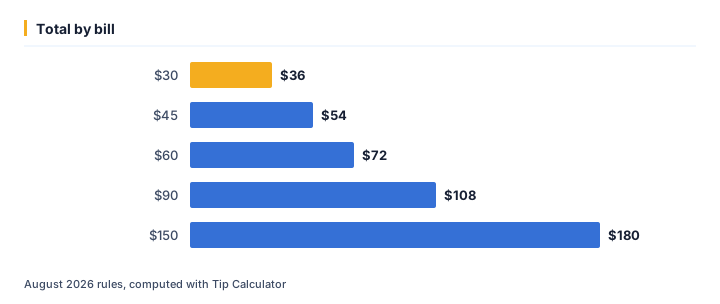
We ran 5 values of bill through the calculator and left every other input at its default. As of August 2026, the output was:
| Bill ($) | Total ($) | Tip amount ($) | Per person ($) |
|---|---|---|---|
| 30 | 36 | 6 | 18 |
| 45 | 54 | 9 | 27 |
| 60 | 72 | 12 | 36 |
| 90 | 108 | 18 | 54 |
| 150 | 180 | 30 | 90 |
Running bill from $30 up to $150 moves total from $36 to $180 — a spread of $144. That gap is the part a single headline rate never shows.
The same runs seen through tip amount
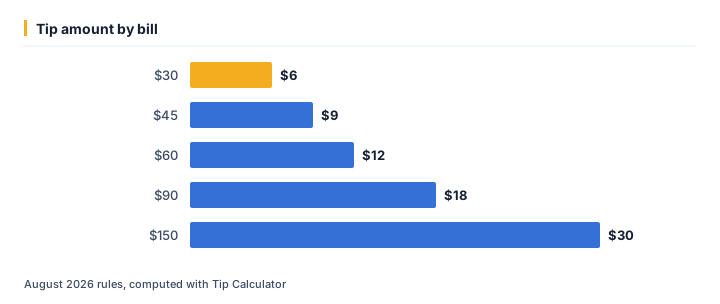
At $30, tip amount works out to $6; at $150 it is $30. Looking only at total tends to understate how much the outcome shifts across that range.
One example, straight from the API
The middle row above (bill = $60) is not a rounded illustration — it is exactly what /api/v1/tools/tip-calculator/calculate returns for that input, August 2026 rules:
{
    "tool": "tip-calculator",
    "inputs": {
        "bill": 60,
        "tip": 20,
        "people": 2
    },
    "result": {
        "tip_amount": 12,
        "total": 72,
        "per_person": 36
    }
}
Assumptions behind these figures
| Input | Value |
|---|---|
| Bill | $60 |
| Tip | $20 |
| People | $2 |
| As of | August 2026 |
| Method | identical to /tools/tip-calculator |
Rates, thresholds and typical costs change over time; the numbers above are accurate as of August 2026, not a permanent guarantee. For your own situation, open the Tip Calculator and enter your real numbers — the calculator runs the same code that produced every figure on this page.
Ready to crunch your numbers?
Open the Tip Calculator and get an answer in seconds.
Editorial Team
We write plain-English money guides and build the free calculators behind them.