American tipping conventions have shifted faster than most people realize. Here is the current 2026 baseline for every common service category — restaurants, rideshare, salons, delivery, and the new tip prompts everywhere.
American tipping conventions have changed faster than most people realize. The baseline tip at a sit-down restaurant has crept from 15% in the 1990s, to 18% in the 2010s, to 20% as the standard expectation today — and many establishments now suggest 25% or even 30% on the default screen. Service categories that never traditionally took tips (counter-service coffee, retail checkout, self-service ice cream) now routinely present tip prompts. The result is genuine confusion for most consumers about what is actually expected and what is socially optional.
This guide lays out the current 2026 standards for every common service category, the math that justifies each baseline, when to tip more or less, and the new "tip creep" categories where the social expectation is still unsettled — so you can navigate every checkout with confidence and without overspending or underspending.
The Current Baselines, At a Glance
| Service | Standard Tip | Notes |
|---|---|---|
| Sit-down restaurant | 18–22% pre-tax | 20% is the modern default |
| Bar (drinks) | $1–$2 per drink, or 18–20% on tab | Whichever is higher |
| Buffet / counter service | 10% or skip | Optional; lower expectation |
| Coffee shop / quick service | $1, or 10–15% | Optional; tip jar context |
| Food delivery (driver) | 15–20% of order, $5 minimum | Separate from app fees |
| Rideshare (Uber/Lyft) | 15–20% | In-app or cash |
| Taxi | 15–20% | Round up + extra |
| Haircut / salon | 15–20% on service | Each technician tipped separately |
| Massage / spa | 18–20% on service | Pre-service-fee total |
| Tour guide | 10–20% per person | Higher for small private groups |
| Bartender at private event | $1–$2 per drink served | Or 20% of bar bill |
| Hotel housekeeping | $3–$5 per night | Daily, in-room |
| Hotel bellhop / luggage | $1–$2 per bag | $5 minimum for several bags |
| Hotel valet | $2–$5 | On retrieval, not drop-off |
| Movers | $20–$50 per mover | For a typical job |
| Furniture delivery | $5–$20 per person | Especially for stairs/heavy |
| Grocery delivery | 15–20% of order | $5 minimum |
The two patterns to remember:
- Service-based tipping (restaurants, salons, taxis): percentage of the bill, typically 18–20% in 2026.
- Task-based tipping (delivery, hotel staff): fixed dollar amounts per task or item.
Restaurants and Bars
The single most common tipping context, and the one with the strongest social expectation.
Sit-down restaurants
Standard: 20% pre-tax. A decade ago, 18% was the floor and 20% was generous. In 2026, 20% is the floor for adequate service and 22–25% is the generous range. Tip on the pre-tax total, not the post-tax total — though the difference is small.
Why the increase? Some real factors and some less defensible ones:
- Restaurant wages for tipped workers in many states are still well below standard minimum wage (the "tipped minimum wage" can be as low as $2.13/hour federally, supplemented by tips).
- Labor costs have risen substantially since 2020, and tip expectations have moved with them.
- Restaurant point-of-sale systems now default to higher percentages (often 18/20/25%), which slowly normalizes the higher numbers.
Bump up for exceptional service (25%+), bump down only for genuinely poor service (15% as a floor for adequate service). Going below 15% should be reserved for genuinely bad experiences, not for routine dissatisfactions — restaurants pay servers based on tipped income, and a sub-15% tip on a $50 bill is a meaningful reduction in someone's day.
Counter-service and fast-casual
Standard: $1, or 10% on smaller orders. Often skipped on the smallest orders. Counter-service tipping is the most contested category in modern American tipping. The social expectation is genuinely soft — tipping is appreciated but not strictly required, especially for transactions involving no table service.
A reasonable framework: tip $1–$2 on orders under $10, 10% on orders $10–$30, 15% on orders above $30. Skip entirely on the smallest transactions ($3 coffee with no preparation complexity).
Buffet and self-serve
Standard: 10%, or skip entirely. The server brings drinks and clears plates; the value provided is genuine but limited. 10% is appropriate; skipping is socially acceptable for self-serve only.
Bars
Standard: $1–$2 per drink for simple drinks, $2–$3 for cocktails. Or 18–20% on a tab. Whichever is higher.
A useful rule: for a single beer or wine pour, $1–$2 per drink covers the social expectation. For complex cocktails involving multiple steps and ingredients, $2–$3 is appropriate. If you're running a tab and paying at the end, 18–20% of the tab matches the restaurant standard.
For pre-paid drinks at private events with an open bar, $1–$2 per drink as a separate tip is the norm.
Transportation
Rideshare (Uber, Lyft)
Standard: 15–20%. The in-app tip prompt typically offers 10/15/20/custom; 18% is the modern middle-of-the-road choice. Bump to 25% for exceptional service, long routes with multiple stops, or driver assistance with luggage.
In-app tipping is now overwhelmingly standard; cash tips are still appreciated for drivers but rare.
Traditional taxis
Standard: 15–20% of fare. Round up + a small extra is socially acceptable for short rides. Slightly different culture from rideshare — many taxi customers still pay in cash and round up.
Airport shuttles
Standard: $2 per bag, $5 minimum if driver handles luggage. Skip entirely for self-service shuttles.
Limousines and private cars
Standard: 15–20% of fare, or $20+ for shorter rides. Often built into the booking price; check before tipping additionally.
Movers
Standard: $20–$50 per mover for a typical move. Adjust upward for stairs, heavy items, hot weather, or particularly long days. $40–$60 per mover is appropriate for a full-day local move; $50–$100+ for a complex out-of-state move where the same crew handles both ends.
Furniture / appliance delivery
Standard: $5–$20 per delivery person. $5–$10 for a simple ground-floor delivery; $15–$20 for stairs, heavy items, or assembly.
Personal Services
Haircuts and salons
Standard: 15–20% on service total, tipped to each technician separately. If a stylist cuts your hair and a separate technician colors it, each receives a separate 15–20% tip on their respective portion of the service.
The owner of the salon traditionally received no tip if they cut your hair themselves, but this convention has largely faded in the US. Tip the owner the same as you would any other stylist.
Massage, spa, and facial services
Standard: 18–20% on service total. Tip on the pre-service-fee, pre-tax amount. Many spas include a "service fee" or "spa fee" that is not the same as a gratuity — confirm with the front desk if unclear.
Nail technicians
Standard: 20% on service. A typical $50 mani-pedi includes a $10 tip in 2026. Slightly higher for complex art work or extended services.
Tattoo artists
Standard: 15–25% on the total session. Cash is preferred; the studio takes a cut of card-based payments. For long sessions (4+ hours), substantial tips ($50–$100 in addition to the percentage) are common.
Personal trainers and instructors
Standard: typically no tip on routine sessions, but a holiday tip of one or two session fees is common. For exceptional one-time experiences (private yoga, special instruction), 15–20% is appropriate.
Dog groomers
Standard: 15–20% on service. Bump up for difficult dogs or specialty work.
Hotel and Travel
The category most travelers underestimate, partly because no single transaction is large.
Housekeeping
Standard: $3–$5 per night, left in the room each day or as a lump at checkout. Left daily is preferred because housekeeping staff often rotates across the stay. A common implementation: leave the tip in an envelope or with a small note ("Thank you").
Bellhop / luggage assistance
Standard: $1–$2 per bag, $5 minimum for multiple bags or significant assistance.
Concierge
Standard: $5–$20 for a meaningful task (restaurant reservation, theater tickets, special request). Skip for trivial information requests.
Valet parking
Standard: $2–$5 on retrieval, not on drop-off. Bump higher for valets at expensive hotels, late-night service, or particularly attentive handling.
Room service
Standard: 15–20%, but check the bill first. Many hotels include an automatic "delivery fee" or "service charge" that goes to the staff (or doesn't — practices vary). If a service charge is already included, an additional 5–10% on top is generous; the absence of a service charge means a full 15–20% tip is appropriate.
Tour guides
Standard: 10–20% of tour cost, per person. Higher for small private tours; toward the lower end for large group tours. For free walking tours, $10–$25 per person is the typical expectation.
Travel agents / cruise stewards
Standard: depends on type. Many cruises now automatically add a daily gratuity (typically $15–$25 per passenger per day) — confirm and adjust at the front desk if service warrants more or less.
Delivery (Food and Goods)
Food delivery via app (DoorDash, Uber Eats, Grubhub)
Standard: 15–20% of order, $5 minimum. Tip in the app at order time; bump on receipt if service was exceptional.
The "delivery fee" and "service fee" that appear in the app are not tips — most or all of those fees go to the platform, not the driver. The driver's compensation depends substantially on the tip. Driver pay structures change frequently; the broad pattern in 2026 is that tips meaningfully drive whether drivers accept your order and how attentively they handle it.
Grocery delivery (Instacart, Walmart, etc.)
Standard: 15–20% of order, $5 minimum. Same dynamic as food delivery: the platform fees go to the platform, the tip goes to the shopper.
Pizza delivery (traditional, restaurant-direct)
Standard: 15–20%, $3–$5 minimum. Often a lower percentage than full-meal restaurant delivery because the delivery fee charged is typically going to the driver in part. Confirm with the restaurant if unclear.
Furniture / appliance / package delivery
Standard: $5–$20 per delivery person (covered above under transportation).
The "Tip Creep" Categories
Several categories have started presenting tip prompts in the last few years that traditionally did not involve tipping. The social expectation is still unsettled.
Retail checkout
Recent development; expectation is soft. Some retailers (especially independent boutiques, food retailers, and some chains) now present tip prompts on the card reader after retail purchases. Most consumers reasonably skip these; tipping is appreciated but not socially required.
Self-service kiosks
Don't. A kiosk involves no service worker handling your transaction. Tip prompts on self-service kiosks reflect platform UX defaults more than social expectation.
Coffee shops, especially chains
Optional, soft expectation. A $0.50–$1 tip on a $5 latte is generous; skipping is socially acceptable. For drinks involving substantial preparation, $1+ is the right floor.
Counter-service quick-serve restaurants
Optional, soft expectation. Lower than table-service tipping by social convention. 10% on the bill or skipping entirely are both within norms.
"Round-up for charity" prompts
Different category entirely. These are charitable donations to the merchant's chosen partner, not tips. Decide based on your charitable giving plans, not your tipping practice.
When to Tip Less (Or Not at All)
A few categories where tipping less, or skipping entirely, is socially defensible:
- Severely poor service — and even then, 10–12% is a more appropriate signal than $0, which usually reads as "you forgot to tip" rather than "you were unhappy."
- Self-service categories — kiosks, vending, app-only ordering with no human interaction.
- When a mandatory service charge is included on the bill (common for large groups at restaurants and some venues). An additional 5–10% is generous; not required.
- Salaried positions in jobs that don't traditionally receive tips — your dentist, doctor, lawyer, accountant. Holiday cards or modest gifts are appropriate; tips are not.
- Public-sector workers — postal carriers, sanitation workers, government employees. Many cannot legally accept cash tips. Holiday gifts (homemade items, small purchased gifts under $25) are acceptable.
Common Mistakes
- Tipping on the post-tax amount. The standard is pre-tax. The difference is small (8–10% sales tax means 18% of pre-tax ≈ 19.5% of post-tax), but the social standard is pre-tax.
- Tipping on automatic service charges. If the bill already includes an 18% service charge for a large group, an additional 18% on top is excessive.
- Forgetting to tip housekeeping. Hotel housekeeping is one of the most consistently undertipped service categories. Set a habit of leaving $3–$5 per night.
- Tipping only on the visible service. A massage therapist's tip is on the service; the spa's separate "service fee" line item is not a tip — confirm.
- Tipping too low because the bill is high. A $200 dinner deserves 20% just as a $20 lunch does. The percentage is the standard; absolute dollar amounts scale with the bill.
- Inflating the tip to feel generous in front of others. Sustainable tipping practice is based on standards, not social signaling. Tip your real number consistently.
Frequently Asked Questions
Is 18% still acceptable at restaurants? For adequate service, yes — but the modern default has shifted to 20%. 18% is on the floor of acceptable for normal service; 15% is now widely read as "service was poor" rather than as a normal tip.
Do I tip at takeout? A modest tip ($1–$3 on a small order, 10% on larger orders) is appreciated but not strictly required. Some takeout windows now include tip prompts; whether to tip is essentially optional.
Should I tip at restaurants when traveling abroad? US tipping standards are higher than most other countries. Many European, Asian, and Australian restaurants build service into the menu price and tipping 5–10% is generous; tipping 20% would be unusual and sometimes refused. Research the local norm before traveling.
Is it OK to write in a different tip after the fact? Generally no for card transactions — the tip line is your one chance. If you accidentally tip too little, calling the restaurant the next day to adjust is acceptable but rare.
What about tipping when paying in cash? Cash tips often reach the server more directly (and faster) than card tips. Some servers prefer cash tips for this reason. The amount expectation is the same as for card tips.
How do I split the tip when dining with a group? Add the tip before splitting: total bill + tip = group total, divide by number of diners. Splitting the bill, then having each person add a separate tip, often results in undertipping because each person rounds down independently.
Next Steps
- Use the Tip Calculator to instantly compute tips at multiple percentages — useful for splitting bills and trying different tipping levels.
- Build a baseline mental model: 20% pre-tax at restaurants, $1–$2 per drink at bars, 15–20% on personal services, fixed dollar amounts for hotel and delivery staff.
- Decide your default behavior on the "tip creep" categories (coffee, retail, self-service). Once you've decided, the decision becomes a habit rather than an awkward in-line choice.
Tipping is one of the smallest line items in any monthly budget and one of the largest sources of awkwardness in daily commerce. A consistent, internalized framework removes the awkwardness — and ensures the people actually doing the work get fairly compensated for it.
Run the numbers
Everything below came out of this site's own Budget Calculator (50/30/20). The figures are not quoted from anywhere else: each row is one run of the same calculation the tool page performs, using August 2026 rules. Put the same inputs in and you will get the same output.
How the result moves with income
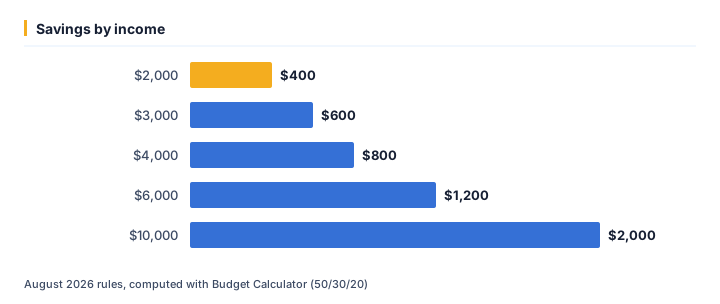
We ran 5 values of income through the calculator and left every other input at its default. As of August 2026, the output was:
| Income ($) | Savings ($) | Needs ($) | Wants ($) |
|---|---|---|---|
| 2,000 | 400 | 1,000 | 600 |
| 3,000 | 600 | 1,500 | 900 |
| 4,000 | 800 | 2,000 | 1,200 |
| 6,000 | 1,200 | 3,000 | 1,800 |
| 10,000 | 2,000 | 5,000 | 3,000 |
Running income from $2,000 up to $10,000 moves savings from $400 to $2,000 — a spread of $1,600. That gap is the part a single headline rate never shows.
The same runs seen through needs
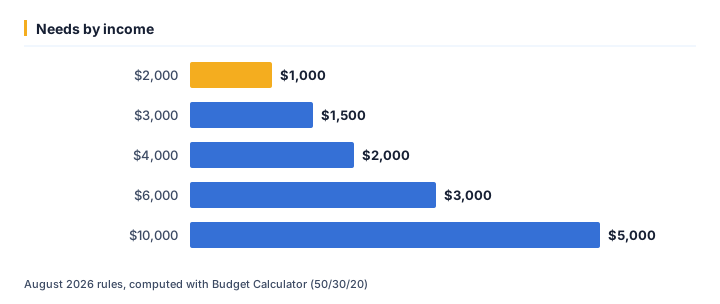
At $2,000, needs works out to $1,000; at $10,000 it is $5,000. Looking only at savings tends to understate how much the outcome shifts across that range.
One example, straight from the API
The middle row above (income = $4,000) is not a rounded illustration — it is exactly what /api/v1/tools/budget-calculator/calculate returns for that input, August 2026 rules:
{
    "tool": "budget-calculator",
    "inputs": {
        "income": 4000
    },
    "result": {
        "needs": 2000,
        "wants": 1200,
        "savings": 800
    }
}
Assumptions behind these figures
| Input | Value |
|---|---|
| Income | $4,000 |
| As of | August 2026 |
| Method | identical to /tools/budget-calculator |
Rates, thresholds and typical costs change over time; the numbers above are accurate as of August 2026, not a permanent guarantee. For your own situation, open the Budget Calculator (50/30/20) and enter your real numbers — the calculator runs the same code that produced every figure on this page.
Ready to crunch your numbers?
Open the Budget Calculator (50/30/20) and get an answer in seconds.
Editorial Team
We write plain-English money guides and build the free calculators behind them.